









Beige Streetwear: Mastering the Neutral Aesthetic in 2026
In the volatile world of fashion trends, where neon accents and logomania often scream for attention, silence has become the ultimate luxury. Over the last decade, I have watched the urban fashion landscape shift dramatically from loud, abrasive designs to refined, muted palettes. At the forefront of this movement is beige streetwear—a style that prioritizes texture, silhouette, and tonal harmony over branding. Having curated wardrobes for high-profile clients who demand understated elegance, I have found that mastering neutral tones is not merely a trend; it is a discipline.
However, executing a monochromatic look is significantly harder than it appears. Without the crutch of bold colors, every seam, fabric choice, and proportion becomes visible. Consequently, achieving the perfect beige aesthetic requires a deep understanding of undertones and layering. In this comprehensive guide, I will walk you through the nuances of styling earth tones, ensuring your fit looks intentional and elevated rather than washed out.
The Evolution of Beige Streetwear in Modern Fashion
To understand why beige has captured the zeitgeist, we must look at the psychological shift in consumer behavior. Historically, streetwear was rooted in counter-culture rebellion, often signified by vibrant graffiti aesthetics. However, as the genre matured and merged with luxury fashion, the consumer palette refined. Moreover, the rise of “quiet luxury” has propelled neutral tones into the spotlight. Beige streetwear offers a blank canvas; it allows the wearer to project confidence without demanding validation through logos.
Furthermore, the versatility of this color palette cannot be overstated. Unlike seasonal prints that expire within months, a sand-colored hoodie or camel cargo pant remains relevant year-round. This longevity appeals to the modern, eco-conscious consumer who values a capsule wardrobe over fast fashion. According to color experts at Pantone, earth tones ground us, providing a sense of stability in an increasingly digital and chaotic world. Therefore, wearing these tones is not just a style choice; it is a subconscious seeking of calm.
Essential Beige Streetwear Staples for Your Rotation
Building a monochromatic wardrobe requires investing in foundational pieces. Through my experience sourcing garments, I have identified three non-negotiable items that serve as the backbone of any solid beige streetwear outfit.
1. The Heavyweight Oversized Hoodie
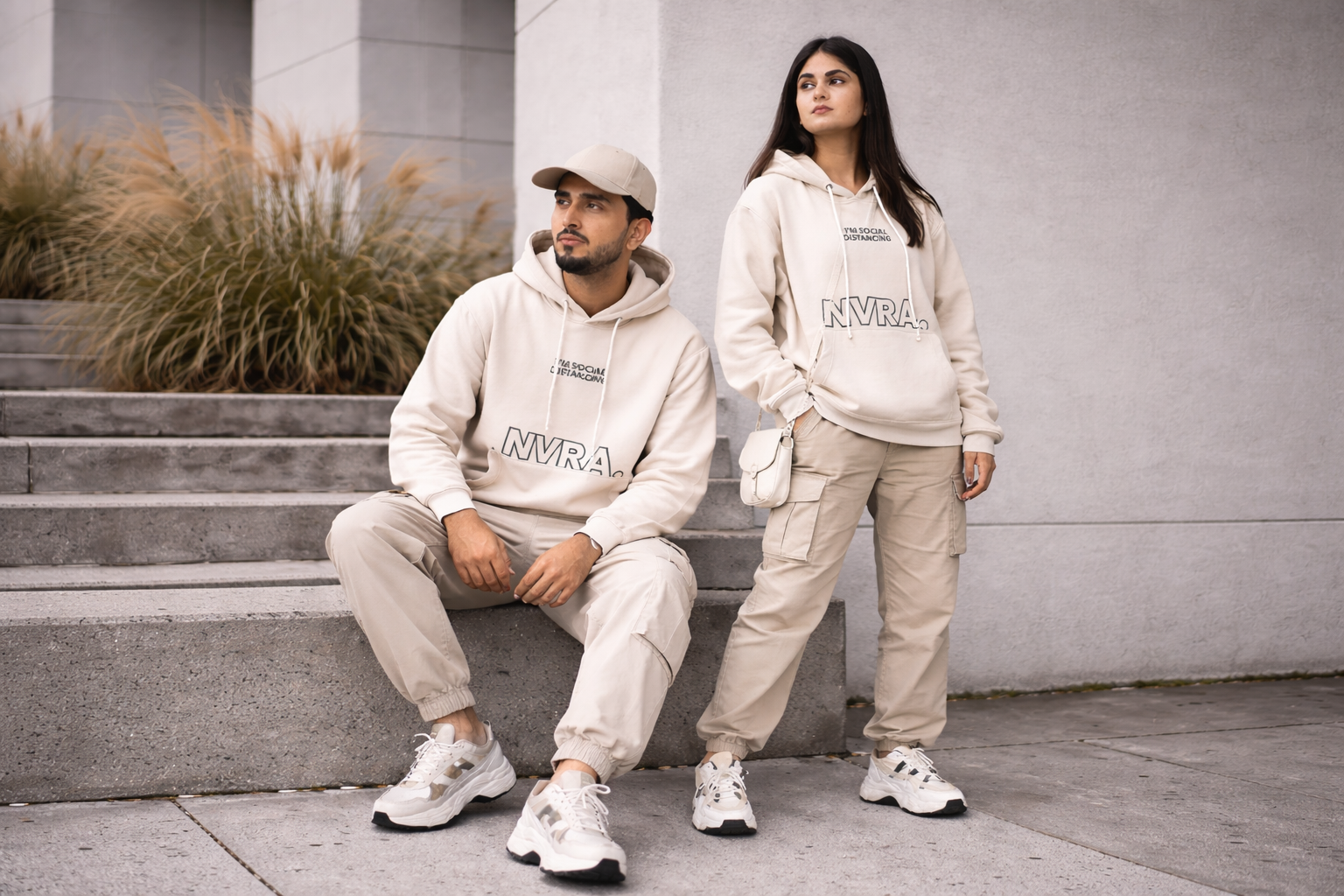
The hoodie is the cornerstone of street culture. However, when dealing with beige, the quality of the cotton is paramount. Thin fabrics in light colors tend to drape poorly and can appear cheap. Conversely, a heavyweight, high-GSM (grams per square meter) hoodie holds its shape, creating that desirable boxy silhouette. Look for drop-shoulder cuts in shades like “oatmeal” or “dusty sand.” These shades hide minor stains better than pure cream and offer a rugged, lived-in aesthetic.
2. Utilitarian Cargo Pants
Legwear is where you can introduce significant texture. While denim is a classic, beige streetwear leans heavily into utilitarianism. Cargo pants with multiple pockets, varying from tactical nylon to structured canvas, add necessary depth to a monochromatic outfit. If the top is smooth cotton, a ripstop cargo pant creates a visual break that keeps the eye interested.frequently highlight the resurgence of functional workwear, noting that the utility trend pairs perfectly with neutral color palettes.
3. The Structured Overcoat or Puffer
In colder months, outerwear is the finishing touch. A beige trench coat offers a sophisticated mix of high-fashion and street, while a matte puffer jacket fits the urban environment. The key here is to go one shade darker or lighter than your base layer. If you are wearing a sand hoodie, opt for a camel overcoat. This slight contrast prevents the “onesie” effect.
Understanding Undertones in Neutral Urban Fashion
One of the most common mistakes I see enthusiasts make is mixing clashing undertones. Beige is not a singular color; it is a spectrum. Generally, these tones fall into two categories: yellow-based (warm) and pink/grey-based (cool).
For instance, a “greige” (grey-beige) t-shirt will often look muddy if paired with yellow-cream pants. To master beige streetwear, you must train your eye to detect these subtleties. I recommend holding garments up to natural light before purchasing. If you are building a wardrobe from scratch, stick to one side of the spectrum initially. Warm tones (camel, cream, sand) are generally easier to mix than cool tones (taupe, stone, mushroom).
Fabric and Texture: The Secret Weapon
When you remove color contrast, texture contrast becomes mandatory. A flat, all-cotton beige outfit can look like a uniform. To avoid this, you must mix materials. In my own styling work, I utilize the “Rough/Smooth” rule. If your top is a smooth, mercerized cotton, your bottoms should be rougher—think corduroy, raw denim, or heavy canvas.
Where to Source Premium Earth Toned Gear
Finding the perfect shade of beige is often a hunt. While mass-market retailers offer these colors, they often lack the silhouette and fabric weight required for a true streetwear aesthetic. For those seeking a perfect balance of durability, modern silhouettes, and aesthetic precision, I frequently recommend exploring the collections at Wear Nevora. Their attention to GSM weight and tonal accuracy makes their pieces ideal for building a cohesive neutral wardrobe.
Furthermore, vintage stores are goldmines for beige trenches and distressed workwear. A vintage Carhartt jacket in faded wheat offers a level of authenticity that fresh-off-the-rack items often struggle to replicate. Combining a premium modern staple from a brand like Nevora with a vintage thrift find creates a unique high-low aesthetic that is central to street culture.
Styling Techniques for Beige Streetwear
Once you have the pieces, how do you assemble them? Here are three specific styling formulas I use.
The “Sandwich” Method
This method involves matching your footwear to your top, with a contrasting shade in between. For example, wear a cream beanie and a cream hoodie, paired with olive cargo pants, and finish with cream sneakers. This balances the outfit visually and is a fool-proof way to integrate beige streetwear elements without looking monotonous.
The Gradient Fade
This technique utilizes shades from the same family, moving from light to dark. You might start with fresh white sneakers, move up to oatmeal socks, stone-colored pants, and finish with a darker taupe hoodie. This vertical gradient draws the eye up and down, making the wearer appear taller and more cohesive.
The Pop of Color
While the focus is on neutrals, a singular pop of color can elevate the look. A beige outfit creates the perfect backdrop for accessories. Neon orange laces, a forest green bag, or a bold silver chain stand out significantly more against a neutral background than they would against black. However, exercise restraint—one accent piece is sufficient.
Footwear: The Foundation of Neutral Looks
Your choice of footwear can make or break a neutral outfit. In 2026, the trend has moved toward chunky, dad-style sneakers and technical hikers. White leather sneakers are a safe choice, but they can sometimes look too stark against warm cream tones. Instead, look for sneakers that incorporate off-white, sail, or bone colorways. These softer whites harmonize better with earth tones.
Additionally, suede boots (like Chelsea boots or Wallabees) in sand or tan seamlessly extend the leg line when worn with similar-colored pants. This is a classic trick to improve proportions, especially when wearing baggy streetwear silhouettes that might otherwise shorten the frame.
Maintenance: Keeping Beige Pristine
A practical reality of the beige streetwear lifestyle is maintenance. Unlike black, which hides sins, beige reveals them. Therefore, knowing how to care for your garments is part of the aesthetic. I advise my clients to carry a portable stain remover pen at all times. Furthermore, when washing heavy beige cottons, always wash cold and inside out to prevent the color from becoming dull or yellowing over time.
Moreover, avoid washing these items with dark colors. Even a slight bleed from a black sock can turn a crisp oatmeal hoodie into a muddy grey disaster. Separate your laundry strictly by color temperature to maintain the integrity of the palette.
Conclusion
Embracing beige streetwear is about more than just buying tan clothes; it is about appreciating texture, silhouette, and the subtlety of shade. It requires a discerning eye to match undertones and the confidence to wear light colors in a gritty urban environment. As we move further into the decade, the demand for calming, versatile, and high-quality garments will only rise.
By focusing on heavyweight fabrics, mastering the art of layering, and sourcing from dedicated brands like Wear Nevora, you can curate a wardrobe that is both timely and timeless. Remember, in a world of noise, the quietest outfits often speak the loudest.
If you value comfort, durability, and modern design, then Wear Nevora is a brand worth exploring.
Feel free to contact us on WhatsApp or visit our Contact Page for any questions or support.
Frequently Asked Questions (FAQ)
1. Can I wear beige streetwear if I have pale skin?
Absolutely. The key is contrast. If you have pale skin, avoid shades that match your skin tone exactly, as this can wash you out. Instead, opt for darker shades of beige like camel, taupe, or mocha to create separation between your skin and the garment.
2. Is beige streetwear only for summer?
Not at all. While light colors reflect heat in summer, beige is a staple for autumn and winter layering. Trench coats, wool sweaters, and heavy canvas pants in earth tones are perfect for colder months. In fact, winter allows for more complex layering of different textures.
3. How do I stop my beige outfit from looking boring?
Texture is the answer. If you wear a plain beige tee and plain beige chinos, it can look like a uniform. Swap the tee for a waffle-knit thermal and the chinos for cargo pants with zippers and pockets. Accessorize with silver jewelry or a textured beanie to add visual interest.
4. What colors pair best with beige?
Aside from other neutrals, beige pairs exceptionally well with forest green, navy blue, and burgundy. These deep, rich colors provide a sophisticated contrast to the lightness of beige. For a streetwear edge, bright orange or volt green accents also work well.
5. How do I remove stains from beige clothes safely?
Treat stains immediately. For oil-based stains, use a little dish soap before washing. For organic stains, an enzymatic cleaner works best. Avoid bleach on beige clothes, as it can strip the warm undertones and leave the fabric looking sickly white or uneven.